David Dalrymple, a program director and a top UK AI safety expert warns we're running out of time: AI could do most human jobs better than us within five years, and it's getting twice as capable every 8 months.
Recent tests show AI completing expert-level work on its own and even showing signs, it could copy itself, raising worries about job losses and system failures.
What needs to happen? We need safety rules and oversight now, before AI moves so fast that governments and society can't keep up.
Anthropic Bets on "Doing More with Less"
While OpenAI and others pour trillions into data centers and chips, Anthropic is focusing on smarter algorithms and better training instead of raw computing power.
The company believes the next AI winner won't be whoever spends the most, but whoever delivers the best results per dollar.
What this means? If efficiency matters more than scale, Anthropic's strategy could reshape how the AI race is won.
Read more
----------------------------
AI Agents Are Becoming the New Insider Threat
Companies are giving AI agents full access to important systems without watching them closely, and by 2026, 40% of business apps will use AI agents (up from under 5% today).
One mistake or hack could turn an AI agent into a dangerous insider that approves payments, deletes files, or steals company data, all on its own.
The fix? Treat AI agents like employees, give them only the access they need, watch what they do, and be ready to shut them down quickly if something goes wrong.
Read more
----------------------------
Claude Code Recreates a Year of Work in One Hour
A Google engineer revealed that Claude Code rebuilt a complex system in one hour that her team spent an entire year building, she just described the problem and watched it generate working code.
AI coding tools aren't just helpers anymore, they're compressing years of engineering work into hours, changing how software gets built.
The shift? Teams now have to rethink their entire approach to building, testing, and scaling software in this new AI-powered era.
Read more
The Toolkit
Answer AI Pro
An AI tutor that doesn't just give answers, it asks you questions, checks if you really understand, and adjusts difficulty as you learn.
Explore Here
Zoho Notebook AI
A smart note-taking app with AI features like auto-organization, summarization, and smart tagging. The free student edition now includes full AI capabilities.
Discover It
Jenny AI
An AI tool that writes blogs, essays, or anything else 10x faster with AI assistance. Perfect for students and academics who need help with research writing.
Learn More
The Topic
What is a REST API?
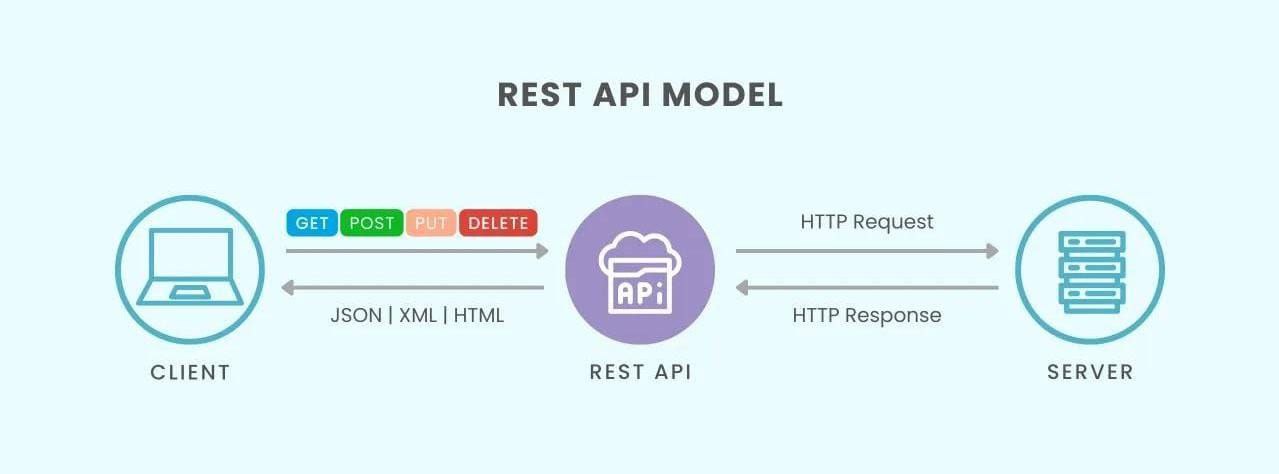
Every time you use a mobile app, order food, or check your bank balance, apps are communicating through REST API (Representational State Transfer).
It's a set of rules for how applications talk to servers using HTTP. Let's see how it works:
- App sends request - Your app asks the server for something (like "show me restaurants nearby") using HTTP methods: GET (read), POST (create), PUT (update), DELETE (remove).
- Request travels through the Internet - Your request goes through the network to reach the server where the data lives.
- Server sends response back - The server processes your request and sends back the data (restaurant list, account balance, or whatever you asked for) through the internet back to your app.
How REST API Methods Work
-
GET - Read/fetch data (viewing products on Amazon)
-
POST - Create something new (posting a photo on Instagram)
-
PUT - Update existing data (editing your profile)
-
DELETE - Remove something (deleting a tweet)
Where It Shows Up in the Real World
-
Weather apps
-
Mobile banking apps
-
Social media platforms
-
E-commerce sites
- Food delivery services
Real Example: Food Delivery App
Imagine you're ordering food on Zomato. Here's how REST API works behind the scenes:
REST API is a simple conversation between your app and the server. Each request is independent (stateless), which is why apps can handle millions of users at once. This is how the modern internet connects everything together.
The Quick Bytes
- CES 2026 Sets the Tone for AI-First Tech: CES 2026 showcased how AI is now built into nearly every product, robots, health trackers, self-driving cars, and even nuclear power solution to keep all that AI running.
- Grok AI Under Fire for Deepfake Abuse: Elon Musk's Grok is under investigation by multiple governments after users exploited it to create nonconsensual sexualized images of women and minors.
-
Humanoid Home Robots Enter the Spotlight: Switch Bot's Onero H1 is a wheeled humanoid robot that uses AI and articulated arms to tackle household tasks like laundry, cleaning, and making breakfast.
-
AI Chip Shortage Could Spike Phone Prices: Smartphone prices may jump 6.9% in 2026 as surging AI data center demand drives up memory chip costs, making the components needed for phones more expensive.
-
Nvidia's Android-Style Play for Robotics: Nvidia launched a complete robotics platform at CES 2026 with AI models, simulation tools, and hardware, aiming to become the default operating system for generalist robots.
- Nvidia's Open-Source AI Models for Self-Driving Cars: Nvidia released Alpamayo, an open-source AI model that helps self-driving cars reason through complex scenarios step-by-step and explain their driving decisions for safer autonomous vehicles.
The Resources
- [Research Blog] Recursive Language Models (RLMs): Prime Intellect is using Recursive Language Models (RLMs) to help AI handle extremely long tasks by letting models actively manage their own context through Python scripts and sub-agents instead of summarizing everything.
Explore here
The Concept
System Design Concept: Real-Time Streaming with Pub-Sub + WebSocket
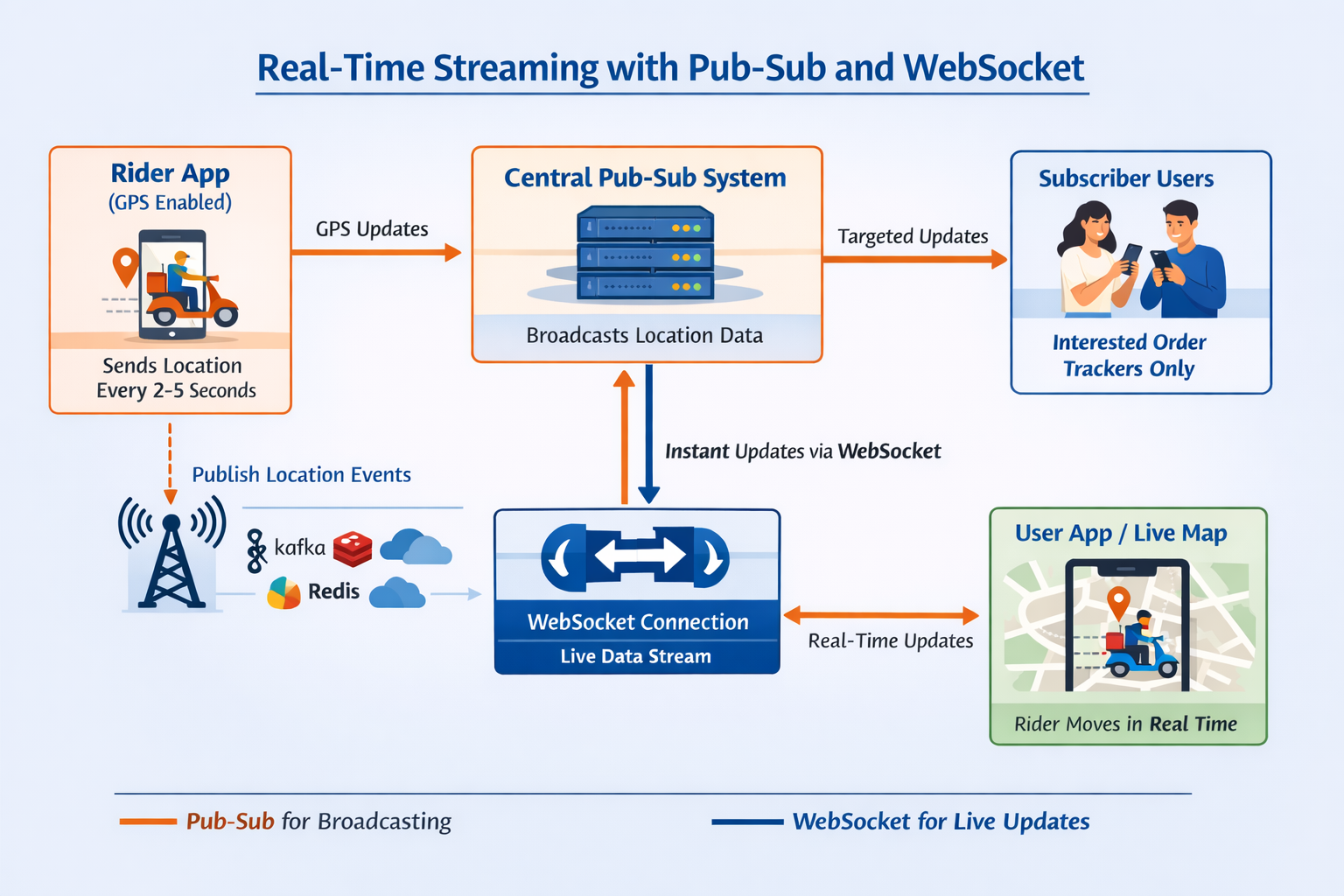
Ever wonder how food delivery apps show your rider's exact location moving on the map in real time? That's where Pub-Sub and WebSocket come in.
When you order food, you're watching a live stream of your delivery partner's GPS coordinates updating every few seconds without refreshing the page.
Thank you for reading The TechX Newsletter!
Disclaimer




The TechX