


The catch? Sharding adds complexity—you’ll need smart routing, load balancing, and backup strategies. But for high-traffic apps, it’s a game-changer.
The Spotlight
Visa, Mastercard build payment rails as AI agents ready to shop and pay autonomously
Payments giant Visa and Mastercard are creating a payment system that will let AI agents search, compare prices, book items, and even pay for users in the same chat, calling the system “agentic commerce.”
Sandeep Malhotra, Mastercard EVP for Core Payments, said, “We went from cash to digital, and now from digital to intelligent.”
Executives say agent-led payments are already in pilots and could launch commercially as early as 2026.
AI shopping will run on platforms like ChatGPT, Gemini, and merchant apps, while retailers test their own agents to avoid losing control.
The News
60 of google's biggest AI announcements in 2025
As 2025 comes to a close, it’s only natural to look back on Google's biggest AI moments of the year. And what a year it’s been — Google shared hundreds of AI announcements about products and features meant to make people’s lives easier in ways big and small. Take a look back at some of their biggest AI news this year (and check out our favourite AI tips we shared this year, too.)
----------------------------
CEO is one of the ‘easier things’ AI could soon replace
Even CEOs should be paying attention. Google's CEO, Sundar Pichai made a surprising admission: "I think what a CEO does is maybe one of the easier things for an AI to do one day." Even the leader of a $3.5 trillion company is thinking strategically about how AI might change his role.
----------------------------
Sam Altman says OpenAI's latest job opening pays over half a million dollars a year and is 'stressful'
OpenAI is hiring a new "head of preparedness" to limit the downsides of AI.
If that seems like a lot of money, consider those potential downsides: job loss, misinformation, abuse by malicious actors, environmental destruction, and the erosion of human agency, to name a few.
The job requires balancing AI safety risks with CEO Sam Altman's fast-paced product releases.
The Toolkit
Elevenlabs
How to build enterprise-ready voice AI Avoid costly delays, reduce R&D overhead, and launch scalable, compliant voice agents in days — not months.
Krisp
AI Meeting Assistant with #1 Noise Cancellation Smarter meetings with transcripts, summaries, and action items — bot-free recording, noise cancellation, and natural accents.
The Topic
The Quick Bytes
- Continuously hardening ChatGPT Atlas against prompt injection attacks: Automated red teaming—powered by reinforcement learning—helps us proactively discover and patch real-world agent exploits before they’re weaponized in the wild.
- Manus Joins Meta for Next Era of Innovation: Joining Meta allows us to build on a stronger, more sustainable foundation without changing how Manus works or how decisions are made,” said Xiao Hong, CEO of Manus.
-
Microsoft CEO Satya Nadella keeps executives out of AI meetings to listen to engineers: In a fast-growing AI world, Satya Nadella’s approach shows that sometimes the best leadership choice is to listen closely and keep things simple.
-
Groq and Nvidia Agreement: Groq announced that it has entered into a non-exclusive licensing agreement with Nvidia for Groq’s inference technology. The agreement reflects a shared focus on expanding access to high-performance, low cost inference.
The Resources
- [honeycomb Blog] Fast and Close to Right: How Accurate Should AI Agents Be?: why hallucinations aren’t the biggest problem in observability agents, the tradeoffs around data fidelity and task accuracy inherent in agent and tool design, and how to evaluate agentic capabilities as they apply to observability.
The Concept
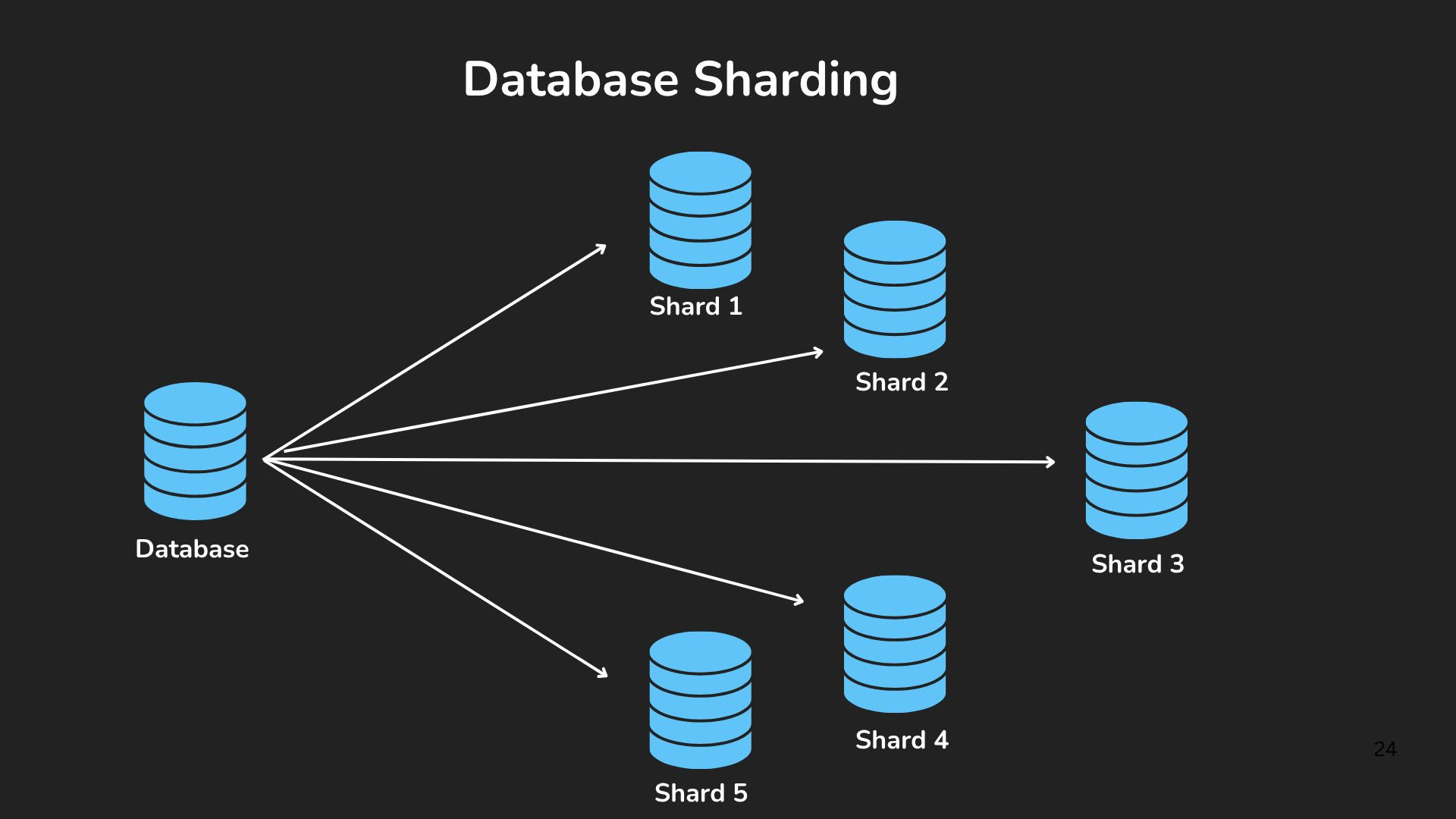
Ever wonder how apps like Uber, Facebook, or Netflix handle millions of users and terabytes of data without crashing? The secret is database sharding—a way to split data across multiple servers so no single machine gets overwhelmed.
Your data doesn’t have to live in one place. Instead, it’s distributed intelligently, balancing load, improving speed, and keeping everything running smoothly.
What Is Database Sharding?
Sharding is like . Instead of storing all books in one building, you split them by genre, author, or region—so readers find what they need faster, and no single branch gets too crowded.
In databases:
- A single database becomes multiple smaller databases (shards).
- Each shard holds a subset of the data.
- Requests are routed to the correct shard automatically.
Why shard?
✅ Performance – Faster queries, less load per server.
✅ Scalability – Add more shards as your user base grows.
✅ Availability – If one shard fails, others keep running.
How Sharding Works
1. Range-Based Sharding = The Organized Filing Cabinet
Divides data by predefined ranges (e.g., user IDs, timestamps).
2. Hash-Based Sharding = The Fair Distributor
Uses a hash function to decide where data goes.
3. Geographic Sharding = The Local Branch
Stores data close to where users are.
Thank you for reading The TechX Newsletter!