India now has more daily ChatGPT users than the US.
India isn't just adopting AI; it's become the global testing ground where companies test models at massive scale before worldwide rollout.
Why India? Ultra-cheap data, mobile-first users, and telecom companies offering free AI subscriptions created the perfect conditions for explosive growth.
Meta's 2026 AI Comeback
Meta is building two new AI models launching early 2026: "Mango" for images and videos, and "Avocado" for helping developers write code.
It is led by Scale AI co-founder Alexandr Wang in Meta's new AI lab after big leadership changes (including AI chief Yann LeCun leaving).
Why it matters? Meta hasn't had a hit AI product yet. If these models flop, they'll fall even further behind OpenAI and Google in the AI race.
Read more
----------------------------
US Launches "Genesis Mission", Big Tech Meets National Science
The US Department of Energy teamed up with 24 tech giants, OpenAI, Google, Microsoft, NVIDIA, Amazon, Anthropic, and more to launch Genesis Mission, a national AI program aimed at speeding up scientific breakthroughs.
The plan is to build a unified platform connecting AI systems, labs, and massive government datasets to double American research impact over the next decade in fusion energy, drug discovery, and quantum computing.
The bigger picture? Countries are now treating AI like electricity or defense; essential infrastructure you can't run a nation without.
Read more
----------------------------
ChatGPT Just Became an App Store
OpenAI now lets developers build and publish apps that run directly inside ChatGPT conversations, order groceries, create slide decks, search listings, all without leaving the chat.
There's a new app directory where you can browse apps, and ChatGPT will suggest useful apps automatically based on your conversation.
What this means? ChatGPT isn't just a chatbot anymore, it's becoming a platform where developers can build apps and reach millions of users who are already there.
Read more
The Toolkit
Disco (Google Labs)
An experimental browser that watches your research and automatically builds custom apps for whatever you're doing, travel planners, flashcard systems, or anything else you need.
Explore Here
Mindgrasp AI
An AI study buddy that turns lectures, PDFs, and notes into quizzes, flashcards, and summaries automatically, making revision faster and more effective.
Discover It
Google Antigravity
An AI-first code editor built for the agent era, helping developers write and ship code faster with agent-driven workflows built in.
Learn More
The Topic
HTTP: How the Web Actually Works
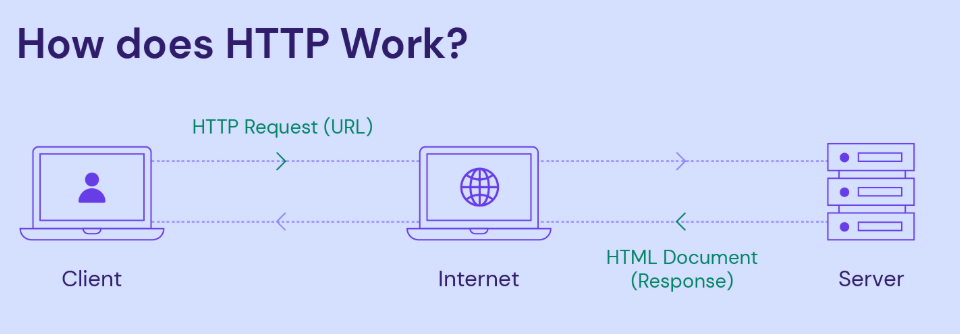
Every time you open a website, submit a form, or call an API, one protocol does all the work: HTTP (Hypertext Transfer Protocol). It's how your browser talks to servers. Let's see how it works:
- Client sends HTTP Request - Your laptop/phone asks the server for something (like "show me this webpage") by sending a request through the internet.
- Request travels through the Internet - Your request goes through the network to reach the server where the website or app lives.
- Server sends HTML Document back - The server processes your request and sends back the response (the webpage, data, or whatever you asked for) through the internet back to your device.
How HTTP Evolved
-
HTTP/0.9 -Super basic, just fetch one HTML page
-
HTTP/1.0 - Added headers and status codes, but opened a new connection every time
-
HTTP/1.1 - Reused connections, made browsing way faster
-
HTTP/2 - Let multiple requests share one connection (multiplexing)
- HTTP/3 – Built on UDP for lower latency, especially on mobile
Where It Shows Up in the Real World
Real Example: Smart Doorbell
Imagine you have a smart doorbell at your front door. Here's how HTTP works behind the scenes:
HTTP is a simple conversation, your browser asks for something, the server replies. Each request is independent (stateless), which is why the web can handle millions of users at once.
The Quick Bytes
- Gemini 3 Flash: Frontier AI at Lightning Speed: Google's Gemini 3 Flash delivers Pro-level reasoning and multimodal intelligence at Flash-level speed and cost, making frontier AI accessible to millions across Google products and APIs.
- Runway's Gen-4.5 Video Model: An AI video model that beat Google and OpenAI in benchmarks, turning text prompts into high-quality video with better physics and motion understanding.
-
Alphabet's $4.75B Clean Energy Deal: Alphabet acquires Intersect Power for $4.75 billion to power AI data centers with clean energy and expand infrastructure capacity.
-
Anthropic's Well-Being Safeguards: Claude is trained to handle sensitive topics like suicide with empathy and direct users to professional help instead of replacing human support.
-
OpenAI Studies Chain-of-Thought Monitoring: OpenAI is testing whether the step-by-step reasoning it shows before giving an answer can catch mistakes or bad behavior early, especially as AI gets more powerful.
The Resources
- [Google Cloud Blog] Google Cloud's Near-Perfect Text-to-SQL: Google Cloud launched Alloy DB AI's natural language API that converts plain English questions into SQL queries with near-100% accuracy, enabling users to query databases naturally without knowing SQL.
Explore here
- [Technical Blog] Uber's Billion-Scale Vector Search: Uber switched to Amazon OpenSearch to power smarter searches that understand meaning (not just keywords), handling billions of searches across rides and deliveries faster and more accurately.
Learn more
- Bloom: Auto-Generated AI Safety Evaluations: Anthropic has released Bloom, an open-source framework that automatically generates behavioral tests to measure how often frontier AI models exhibit specific alignment-relevant behaviors across diverse scenarios.
Try it out
The Concept
System Design Concept: Forward Proxy & Reverse Proxy
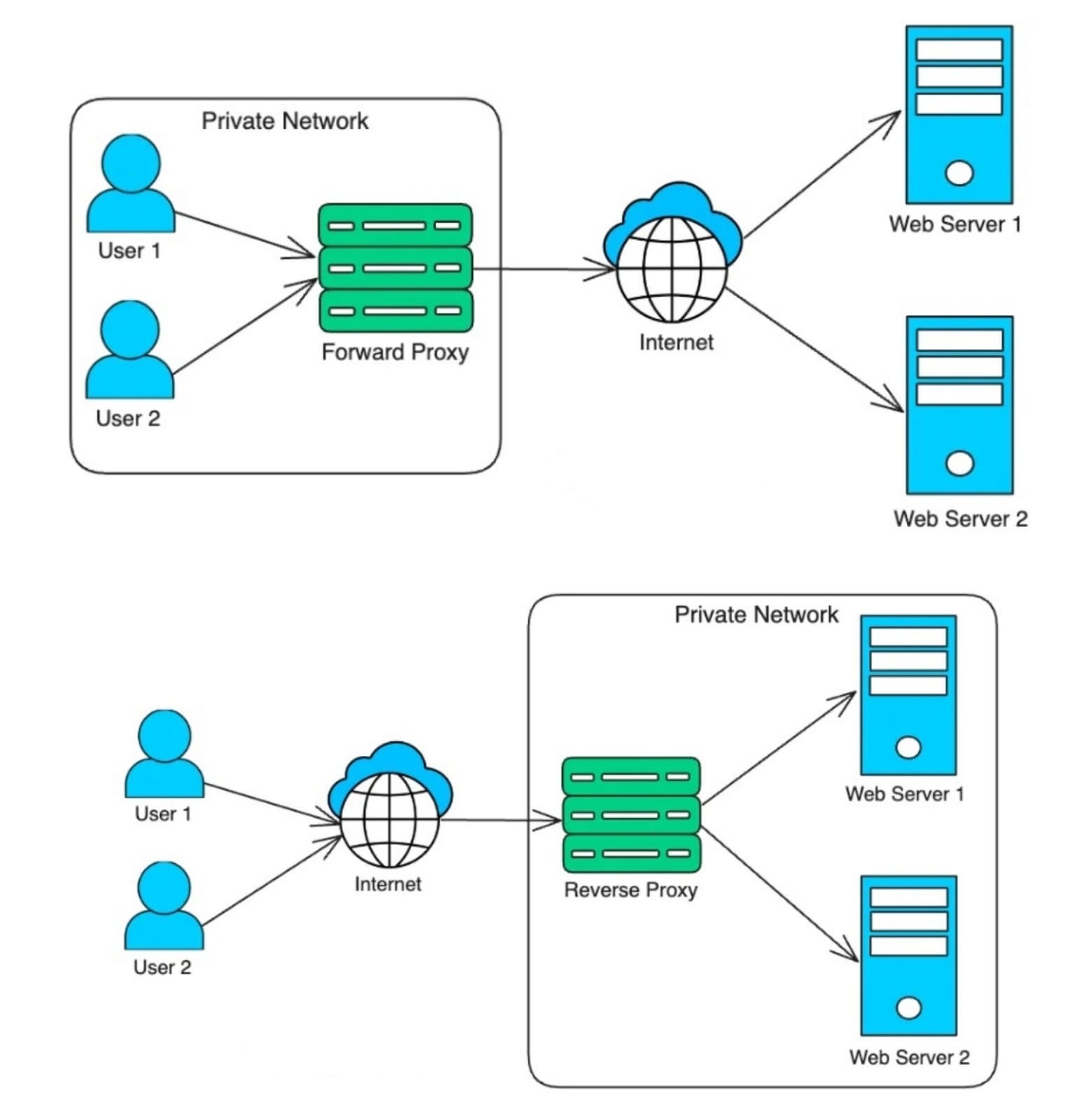
Ever wonder what happens between clicking a link and seeing a website? That's where Forward Proxy and Reverse Proxy work behind the scenes.
Your request doesn't always go straight to the server, it often passes through a smart middleman that controls traffic, security, and performance.
Thank you for reading The TechX Newsletter!
Disclaimer




The TechX